CLIMATE CHANGE MAY BE PUTTING HONEY BEE COLONIES
AT GREATER RISK OF WINTER FAILURE
Introduction
In summer, worker bees typically live for about six weeks. In winter, however, they need to survive for six months or more. A colony therefore depends on producing enough healthy winter bees to carry it through the cold months. Yet winter bees are the daughters of the same queen as summer bees, so what makes them so different?
The transition from summer bees to winter bees is influenced by several internal and external signals, notably:
- shorter periods of daylight;
- cooler temperatures;
- fewer incoming resources, especially pollen;
- reduced brood rearing;
- changes in colony pheromonal signals (Smedal et al. 2009).
How Do These Signals Produce Longer-Lived Bees?
Together, these environmental and colony-level signals trigger hormonal changes through the bee’s endocrine system. In the adult honey bee worker, the system consists of four key components:
- In response to external and internal stimuli, the neurosecretory cells in the brain produce signalling molecules, or neurohormones, which are sent to the corpora cardiaca.
- The corpora cardiaca, a pair of glands which lie behind the brain near the aorta,
store these neurohormones and release them into the haemolymph.
- The nearby corpora allata synthesise and secrete juvenile hormone (JH), which helps regulate physiology, development and behaviour.
- Signals sent in the haemolymph to the fat bodies, which synthesise Vitellogenin (Vg)
Vitellogenin (Vg), a reproductive glycolipoprotein made mainly by the worker’s fat body, works in opposition to JH. Vitellogenin promotes longevity, whereas JH accelerates ageing and the relationship between JH and Vg forms an important feedback loop:
- When JH levels in the haemolymph exceed Vg levels, the worker progresses from nurse bee to forager.
- When Vg levels are higher than JH levels, this progression slows or may stop altogether, and the worker remains in the nurse-bee state for longer (Münch et al. 2015). See Fig 1 below.
Winter bees contain much higher levels of Vg in their fat bodies than summer bees. The most widely accepted working model is therefore that the winter bee represents an extended nurse state. With little or no brood to feed, workers retain their protein reserves instead of using them to produce brood food, and they do not make the hormonal switch into foraging.
So the enlarged fat body of a winter bee can be thought of approximately as:
pollen-derived nutrients → fat body → protein/lipid reserves + high vitellogenin → overwinter survival → spring brood rearing.
This is one of the major physiological differences between a short-lived summer worker and a long-lived winter worker.
Fig 1. How the brain controls juvenile hormone, and how JH and the fat body's vitellogenin suppress each other to produce either a short-lived forager or a long-lived nurse or winter bee. Simplified: ecdysteroids and Vg feedback to the brain are omitted.
Where Did I Go Wrong?
For years, I believed that feeding pollen supplement from late July onwards was the best way to produce large numbers of winter bees. I assumed that big colonies with plenty of brood would sail through winter and emerge strongly the following spring. When some of the strongest colonies dwindled in November or failed altogether, I struggled to understand why.
I blamed the usual suspects: weather that was too cold or not cold enough; conditions that were too wet or too dry; Nosema; Varroa; and a neighbour’s field of sunflowers that may not have provided enough pollen diversity.
I later discovered that studies published as early as 2007 found that winter bees need a good quality, diverse supply of pollen in spring, and that a dearth of pollen in late summer or early autumn is an important trigger for the transition into winter-bee production (Mattila and Otis 2007).
Other more recent studies showed that pollen supplements are consumed by older bees rather than by the nurse bees that need diverse, good quality protein to feed larvae. As a result, nurse bees have to draw down their own precious reserves and, in some cases, cannibalise larvae to make up for protein deficiency (Kleckner et al. 2026).
In effect, by feeding pollen supplement at that point in the season, I may have stimulated further brood production, but I was feeding the foragers rather than the nurses and stimulated the colony to produce summer bees that died in October or November.
If only I’d read the science much earlier in my beekeeping journey!
Why Climate Change Raises the Stakes
That brings me back to the question of climate change. It is the end of September here on the south coast of England and temperatures are still reaching the mid-twenties. There was a shortage of pollen in August and early September, which may have stimulated the shift towards winter-bee production.
Nine of the last ten summers have been warmer than average, and so far this summer has been the warmest on record for south-east England. Four of the last five summers have also been drier than average.
Fig 2. The last ten summers in south-east England averaged 1.2°C warmer than the ten before. Mean June–August air temperature, difference from the 1991–2020 average of 16.6°C, England SE and Central S, 2007–2026. Black lines show decade averages: 2007–16 −0.3°C; 2017–26 +1.0°C. Data: Met Office (2026).
Fig 3. The last ten summers in south-east England were about 20% drier than the ten before. June–August rainfall as a percentage of the 1991–2020 average of 170 mm, England SE and Central S, 2007–2026. Black lines show decade averages: 2007–16 112%; 2017–26 90%. Data: Met Office (2026).
For the past three weeks, nectar and pollen have been relatively abundant again. My concern is that warm weather, incoming pollen, and continued brood rearing could cause colonies to switch back towards producing summer bees rather than consolidating into a long-lived winter population.
Shortening days and cooler nights may help, but I am not convinced they are enough. The evidence suggests that a prolonged warm autumn can indirectly alter the timing and physiological development of the winter-bee population by extending brood rearing, nursing and foraging activity, and by delaying the onset of winter brood (Frunze et al. 2024).
Varroa: A Double Whammy
Extended brood rearing also extends the period during which varroa mites can reproduce. As the bee population begins to decline, varroa numbers may continue to rise exponentially until the colony is weakened or overwhelmed by mites and the viruses they vector, especially Deformed Wing Virus. This can create a “doom loop” that increases winter losses (Smoliński et al. 2021; Rajagopalan et al. 2024). And the bigger the colony, the greater the risk (Loftus et al. 2016; Peck and Seeley 2019).
Moreover, warmer and wetter winters mean there is no natural brood break; varroa continue to multiply in brood cells, damaging the pupae and shortening the lives of the bees required to contribute to the spring buildup.
Fig 4. Winters in south-east England averaged 0.7°C milder in the last decade than the one before. Mean December–February air temperature, difference from the 1991–2020 average of 5.1°C, England SE and Central S, winters 2007–2026 (labelled by the year of January and February). Black lines show decade averages: 2007–16 0.0°C; 2017–26 +0.7°C. Data: Met Office (2026).
Fig 5. Winter rainfall in south-east England has swung widely, with no clear trend over 20 years. December–February rainfall as a percentage of the 1991–2020 average of 233 mm, England SE and Central S, winters 2007–2026. Black lines show decade averages: 2007–16 111%; 2017–26 109%. Data: Met Office (2026).
What About the Queen?
As days shorten and temperatures fall, the queen’s ovaries reduce in size. She cuts down laying or even stops during winter and resumes in late winter or early spring. However, this process differs from the seasonal changes in worker physiology.
In queens, JH is associated with reproductive activity rather than age-related division of labour. Egg laying appears to be controlled by nutrition-sensitive checkpoints during egg development, not by hormones alone. The likely cues are reduced fresh pollen and shorter days.
In practical terms, the queen’s ovaries follow the food the workers provide, so her winter pause is largely driven by her colony (Aamidor et al. 2022).
Conclusion
The key lesson is that successful overwintering depends not simply on the number of bees in the hive, but on the type of bees the colony produces before winter. True winter bees are physiologically distinct: they retain higher protein reserves in enlarged fat bodies, remain in a nurse-like state for longer, and are equipped to survive for months rather than weeks. Anything that prolongs late-season brood rearing may therefore weaken the colony’s preparation for winter, even if the hive appears populous in autumn.
Climate change may make this balance harder to manage. Warmer autumns, renewed pollen flows and extended foraging can blur the seasonal signals that normally help colonies shift into winter mode. At the same time, prolonged brood rearing gives Varroa more opportunities to reproduce, increasing the risk that colonies enter winter with both fewer long-lived bees and a heavier mite burden.
For beekeepers, the practical conclusion is clear: late-season management should aim to support the colony’s natural transition into a durable winter population, rather than simply stimulating more brood. Ensuring adequate spring nutrition, avoiding unnecessary autumn stimulation, and bringing Varroa under control before the bee population contracts may become increasingly important as autumn weather becomes less predictable.
Alan Baxter
Cornell Master Beekeeper
Education Officer
Fareham & District BKA
September 2026
References
Aamidor, S.E., Cardoso-Júnior, C.A.M., Harianto, J., Nowell, C.J., Cole, L., Oldroyd, B.P. & Ronai, I. (2022). Reproductive plasticity and oogenesis in the queen honey bee (Apis mellifera). Journal of Insect Physiology 136: 104347.
Frunze, O., Yun, Y., Kim, H., Garafutdinov, R.R., Na, Y.-E. & Kwon, H.-W. (2024). The effect of seasonal temperatures on the physiology of the overwintered honey bee. PLOS ONE 19(12): e0315062.
Kleckner, K., Noordyke, E.R., Prouty, C. & Ellis, J.D. (2026). Not the nurses: old honey bee workers of resource-handling age primarily interact with and consume pollen substitute patties. Journal of Economic Entomology 119(4): 2992–3001.
Loftus, J.C., Smith, M.L. & Seeley, T.D. (2016). How honey bee colonies survive in the wild: testing the importance of small nests and frequent swarming. PLOS ONE 11(3): e0150362.
Mattila, H.R. & Otis, G.W. (2007). Dwindling pollen resources trigger the transition to broodless populations of long-lived honeybees each autumn. Ecological Entomology 32: 496–505.
Met Office (2026). HadUK-Grid regional climate series: England SE and Central S, monthly mean temperature and rainfall. Met Office National Climate Information Centre, updated 1 September 2026.
Münch, D., Ihle, K.E., Salmela, H. & Amdam, G.V. (2015). Vitellogenin in the honey bee brain: atypical localization of a reproductive protein that promotes longevity. Experimental Gerontology 71: 103–108.
Peck, D.T. & Seeley, T.D. (2019). Mite bombs or robber lures? The roles of drifting and robbing in Varroa destructor transmission from collapsing honey bee colonies to their neighbors. PLOS ONE 14(6): e0218392.
Rajagopalan, K., DeGrandi-Hoffman, G., Pruett, M. et al. (2024). Warmer autumns and winters could reduce honey bee overwintering survival with potential risks for pollination services. Scientific Reports 14: 5410.
Smedal, B., Brynem, M., Kreibich, C.D. & Amdam, G.V. (2009). Brood pheromone suppresses physiology of extreme longevity in honeybees (Apis mellifera). Journal of Experimental Biology 212(23): 3795–3801.
Smoliński, S., Łangowska, A. & Glazaczow, A. (2021). Raised seasonal temperatures reinforce autumn Varroa destructor infestation in honey bee colonies. Scientific Reports 11: 22256.
3-6 April 2025 BBKA Spring Convention
23 March 2025 The first Basic Assessment Preparation Course took place today. There were 8 participants of varying levels of knowledge and experience who were keen to pass this important milestone on their beekeeping journey. We had an interesting inspection of the colony donated to the Association by a former member and which hadn't been looked at for several years. The frames stated falling apart and the combs were in very poor condition, but nonetheless the bees seemed well. Investigation of a partially uncapped brood cell revealed a pupa infested with 2 varroa mites. I wonder if these bees are starting to show hygienic behaviours that indicate a resisitance to varroa. The decision now is whether to treat them for varroa or leave them to see if they are indeed living healthy lives despite the varroa.
The 'rat' colony was down to a solitary queen in the brood box and a few bees huddled in the super. The queen seemed to be very weak and barely alive. We put her in a nuc with a few bees from a nearby healthy colony who seemed to accept her. The nuc is back in my home apiary for plenty of TLC for a few days in the hope that the queen will recover.

Looking at the donated colony with frames breaking up and comb crumbling as we inspected them
21 March 2025 The training apiary is now up and running, shed erected and 4 hives installed so far. Another 6 will join them shortly. Looking forward to the first session of the 2025 Basic Assessment Preparation Course starting on Sunday 23 March at 1500.

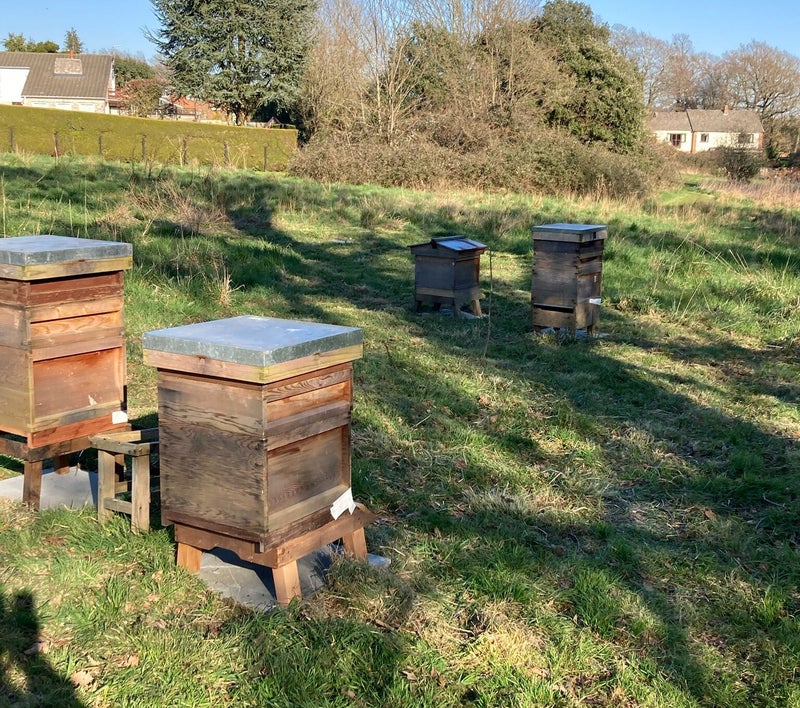

The shed needs a lick of paint!
8 March 2025 Just signed a lease on land for a new apiary where `I will give training and coaching sessions for beekeepers from may local beekeepers association. I have been given a shed for my spare equipment and I hope to be fully installed with 10 hives very soon.
23 January 2025
Just passed the first Module of the Cornell University Master Program in Beekeeping. It is a very different learning experience from the British Beekeepers Association Master Beekeeper Programme !
13 January 2025
Great news! I have passed Module 8, the final theory exam in the BBKA Master Beekeeper qualification process so I now hold the Advanced Theory Certificate with Credit. The final step is a 3-day practical session called the Advanced Husbandry Assessment, after which, if I pass, I will be a Master Beekeeper.

Fit2Fight is now in Germany. Next stop France!
11 December 2024
My lecture at the National Honey Show is now live on YouTube.
https://youtu.be/hxAT_lHjxgY?si=ushjCbH6dtqOwAKU
9 December 2024
Historic event! The first blind beekeeper to lead a British Beekeepers Association:
Former Royal Navy Commander and Barrister, Penny Melville-Brown OBE, was elected as the Chairman of the Fareham and District Beekeepers’ Association last week. The hives of over 100 members of this thriving organisation stretch from the coast at Gosport to the countryside north of Wickham. Their bees pollinate local plants and trees, gardens and crops and produce top-class real honey that many sell.
Penny said, “I confess that I leave the bee-suit to my husband, Alan Baxter, who has all the knowledge and experience of practical beekeeping alongside his Asian Hornet expertise https://www.alanbaxtersblogs.co.uk/ . But I’ve learned masses and am fully involved in extracting and using the honey, making our mead and have even tried creating beeswax polish. Beekeeping can involve the whole family and introduces children to our natural world.”
The FDBKA provides friendly training and mentoring for new beekeepers, shared learning opportunities for the more experienced, regular meetings, loan equipment, apiary visits, an annual honey show, speakers for other organisations and a great supply of local honey for hay-fever sufferers and lovers of good food. Find out more and how to get involved at https://farehambka.co.uk/ .
Penny is supported by a great team committed to growing and strengthening the skills of Association members to maintain their ancient craft in the face of climate change, the Asian Hornet threat and other challenges to our environment.
She was still serving in the Royal Navy when her sight failed before launching a new career running her own business, holding a wide range of public appointments and roles in voluntary organisations before winning an international prize for blind people, cooking around the world and publishing the book of her adventures. She has been awarded an OBE and Honorary Doctorate https://www.pennymelvillebrown.com/
Super proud of you Penny!

18 November 2024
One programme of study ends and preparation for the next challenge begins. In January I start the Cornell University Masters Program. This is the Ivy League University in NY State that holds a special place for students of the honey bee for its research led by Professor Tom Seeley into honey bee behaviour (I suppose I will have to learn to spell it behavior for the duration of the course!).
The Course is very research orientated as you would expect, so lots of research papers to read before it starts.
Whilst all this was happening I was elected Chairman of the Catisfield Memorial Hall Trustees, a local charity serving the community here www.catisfieldmemorialhall.co.uk
So we now have 2 Chairmen in our household !!
16 November 2024
Just taken the final Master Beekeeper Advanced Theory Exam and feeling mightily relieved, even though we have to wait 6 weeks for the results. Studying 'The Modules' as they are known in Beek jargon, and their 7 exams, have dominated much of my life, and that of my incredibly supportive spouse Penny, for the past 4 1/2 years. My next step is to obtain the Microscopy Certificate next November 2025, followed by a 3-day assessment for the Advanced Husbandry Certificate in 2026. If I succeed in all these I will have earned the coveted title of Master Beekeeper. I just hope it will have been worth it.
Artificial Intelligence is being developed to help us to monitor for the presence of Asian Hornets. My friend Dr Pete Kennedy and the team at Exeter University have developed a prototype monitoring station dubbed Vespa-AI which uses a simple Raspberry pi operating system and a miniature camera to take a photo every 30 seconds of insects visiting the bait pad to feed. The AI program has been trained to distinguish between AH and other similar-looking species and it sends a signal to a mobile phone when one appears. Here's one installed in my home apiary.

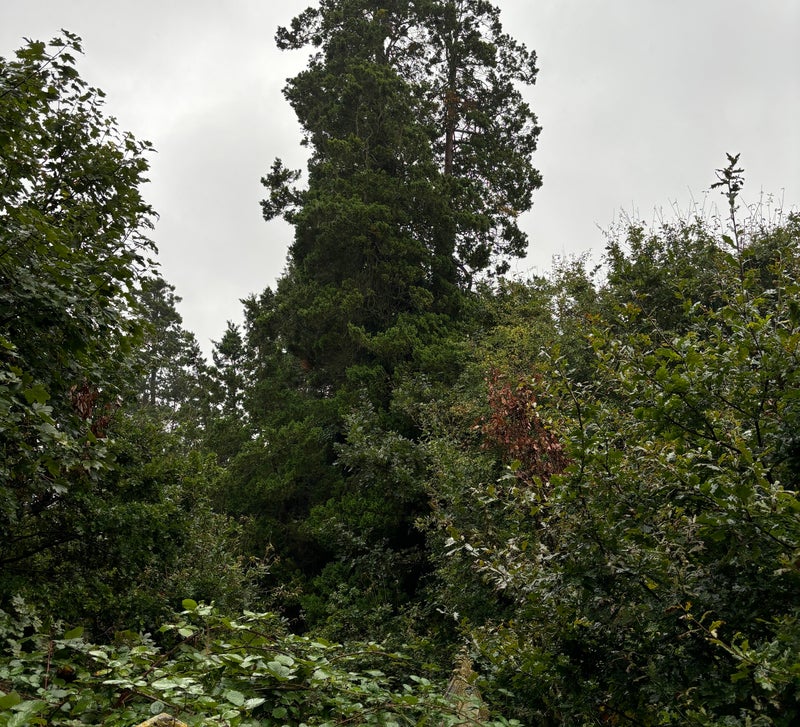
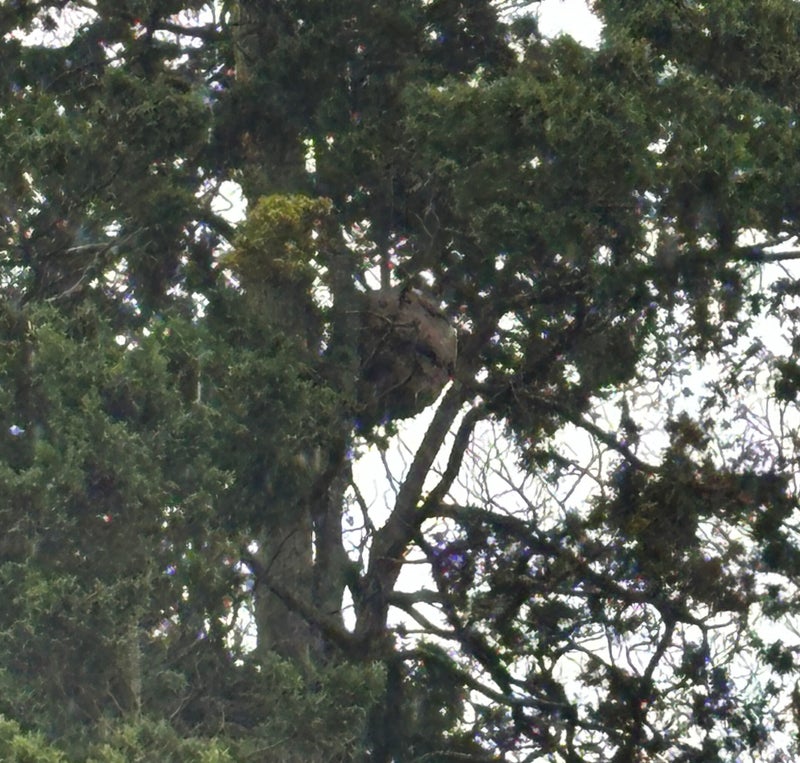
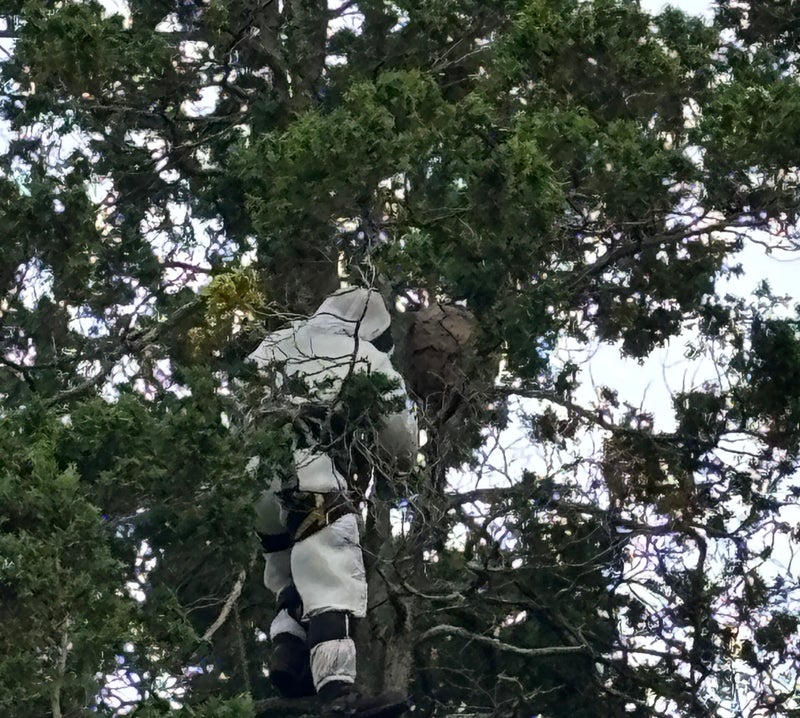

Tree with undergrowth
Close up of the nest
Tree climber at the nest
Nest bagged and ready to lower
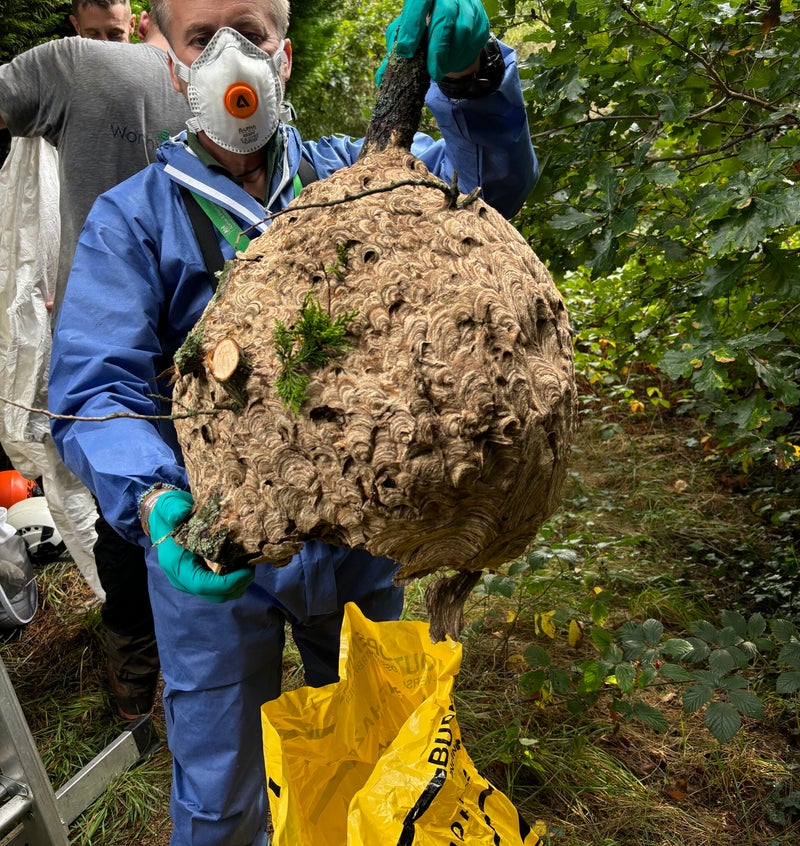
Dan Ethridge, RBI holding the nest.
25/09/2024
Exciting day yesterday in support of the National Bee Unit removing a large Asian Hornet nest from the Old Cemetery in Southampton. The nest was high up in a tall tree which was very overgrown with Ivy and other vegetation. The ground was littered with half-buried graves and tombstones so access with a cherry picker was impossible. The intrepid pair of tree climbers hacked and chopped their way up until they were close enough to reach with the long lance insecticide gun and dispense two doses of the poison to kill the occupants of the nest. Then they climbed higher and cut out the branch on which the nest was built, bagged it and lowered it to the ground. The nest is probably the biggest found so far this year. It will be sent to the government laboratory for analysis to tell us if it's a new queen flown, blown or hitch--hiked from France, or if it's home grown.
Congratulations to Dan Etheridge, our Regional Bee Inspector, and his team of tree climbers for a thoroughly professional job.
It's now mid September and time to stimulate our queens to lay the eggs that will emerge in October as the vitally important winter bees. These workers will live until next spring, keep the queen warm and fedampton, and help raise the growing family of 2025 workers.
31 August, it's the end of the honey season and we've finished extracting the summer blossom crop.
Despite a dodgy spring and summer weather -wise, our bees managed to produce an average surplus of 42lbs of delicious, fragrant honey per hive, whilst still leaving enough stores to see them through until next spring.
Next job is to complete the varroa treatment and put the honey supers into winter store having protected them against wax moth.

Looking forward to the privilege of speaking at the National Honey Show at Sandown Park in October.
My latest batch of grafted queens have emerged in the incubator and been transferred to Apidea mini mating nucs. Thus begins the next stage in their perilous journey towards becoming a mated, laying queen ready to head her own colony.
Although they have been selected from my calmest, gentlest colony, mating is a lottery over which I have no control. They will fly to the nearest Drone Congregation Area where they will be inseminated by about 15 different drones. The fittest and strongest drones usually get there first so if there are a few scallywags amongst them her offspring are likely to display some of their genetic characteristics. Only time will tell.
GENERAL HUSBANDRY ASSESSMENT 13 JUNE 2024
Cock-a-hoop to learn that I passed my General Husbandry Assessment with flying colours! This is a major milestone and means I am one important step closer to achieving my aim of becoming a Master Beekeeper.
Sponsoring Women in Birindi, Uganda to create sustainable income from beekeeping.
11 March 2024 Proud to have been elected to serve as a Trustee of Hampshire Beekeepers Association at the AGM yesterday. Looking forward to helping to further the cause of good Beekeeping in the County and beyond.
See my article on Fit2Fight in the March edition of BeeCraft Magazine.
